Biohybrid Cell Therapy Device
I work in the Krishnan Lab at Stanford on implantable devices for living cell therapeutics — engineered cells that sit under the skin and produce a drug continuously, so the patient doesn't have to keep re-dosing. The targets are Type 1 Diabetes, immunotherapy, and hormone replacement.
The lab's wider remit is bio-integrated and biohybrid devices: pairing electronic materials with living tissue, across drug delivery, biosensing, and tissue engineering. My work sits on the drug-delivery side of that, and the biosensing thread at the end of this page runs back toward the rest of it.
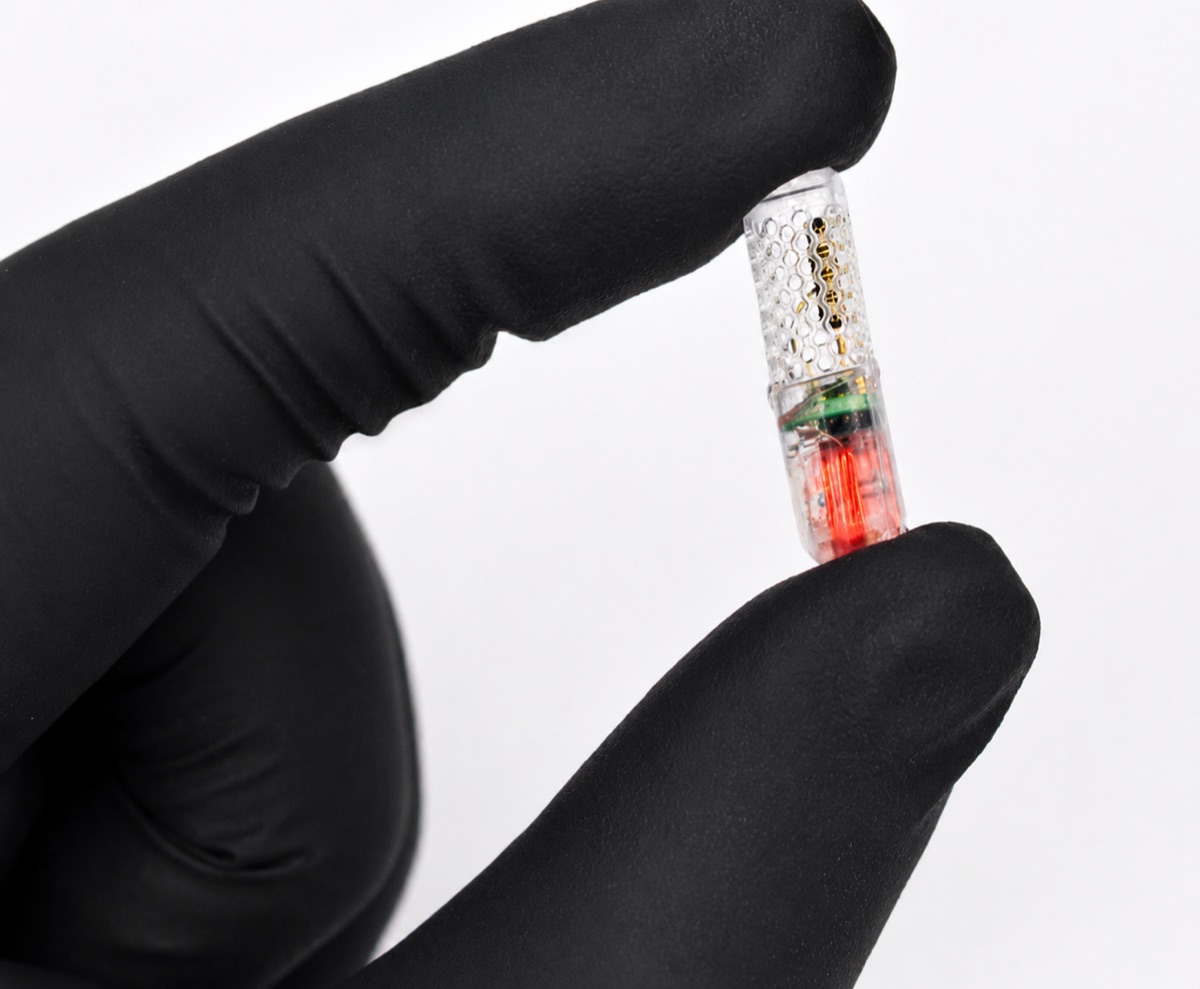
Keeping those cells alive is the hard part. They have to be hidden from the immune system and they have to breathe. The device does both: a microcapsule immunoisolation layer shields the cells, and a proton exchange membrane splits water to generate oxygen locally, on demand, instead of relying on whatever diffuses in from the surrounding tissue.
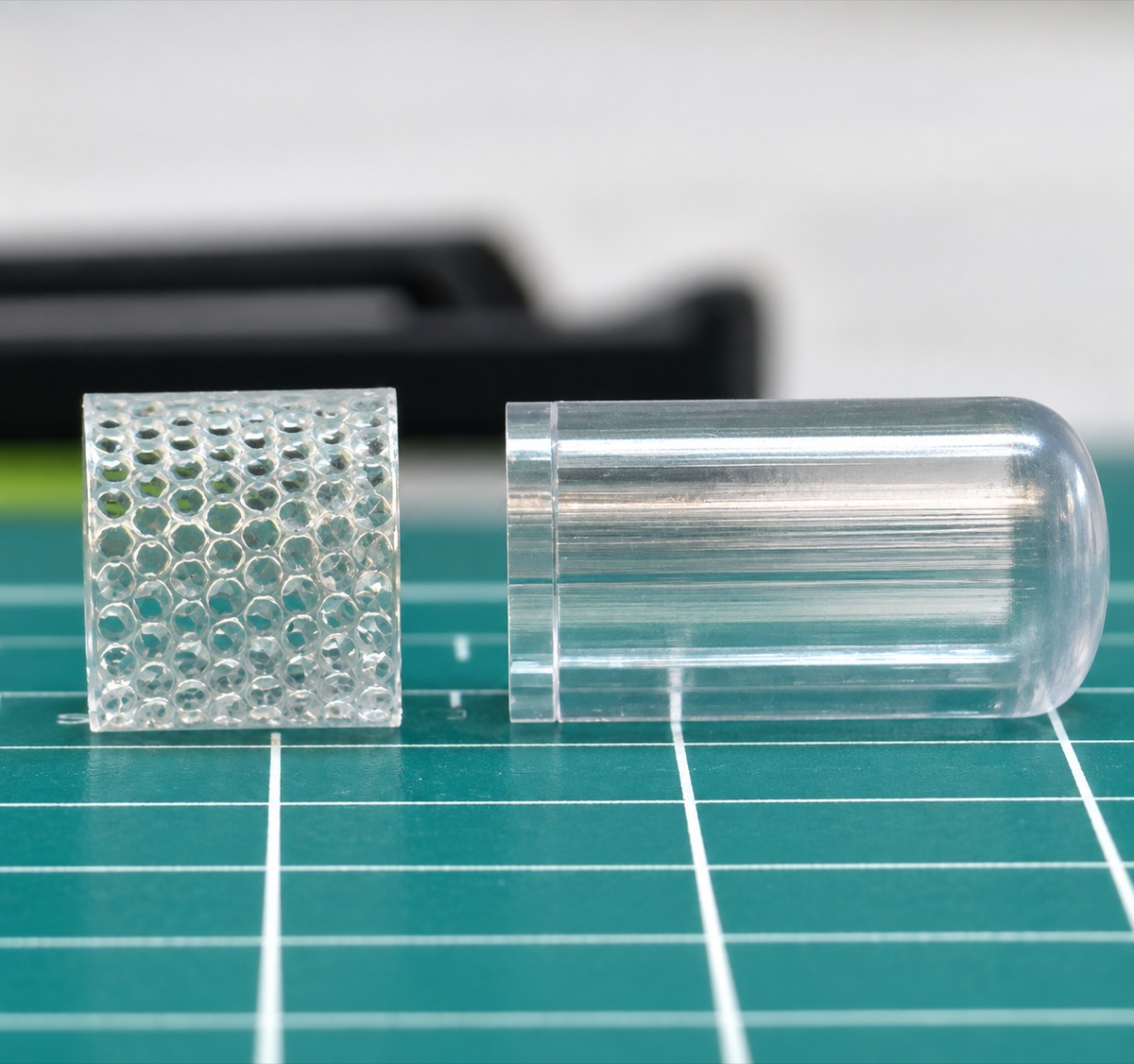
My work runs across the stack rather than down one layer of it. On the materials side I fabricate the devices — PDMS processing and the porous chassis, with parametric CAD in Fusion 360 iterating pore geometry, lattice spacing, and wall thickness against three constraints that pull against each other: mechanical strength, metabolite diffusion, and fibrosis at the implant-tissue interface.
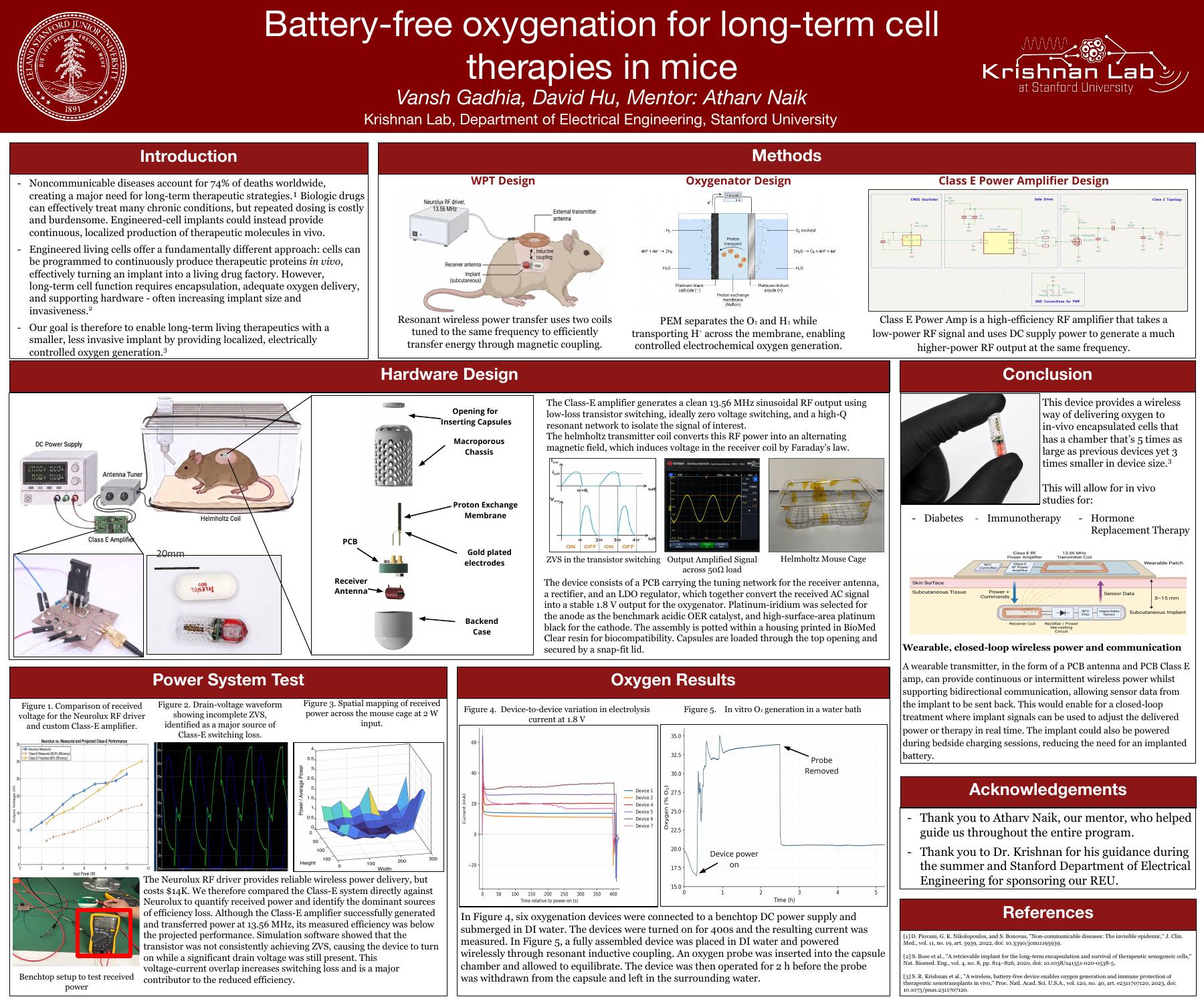
On the electronics side I design PCBs and work on the Class-E RF amplifier that delivers wireless power at 13.56 MHz.
Through Stanford EE's REU program I presented this work with David Hu, mentored by Atharv Naik.
Next is closing the loop: adding biosensors so the implant can report back and have its power and therapy adjusted in real time, rather than being driven blind.